
What Is a Meme? Inside the Language of the Internet
- Nov 2, 2025
- 6 min read
Updated: Nov 4, 2025
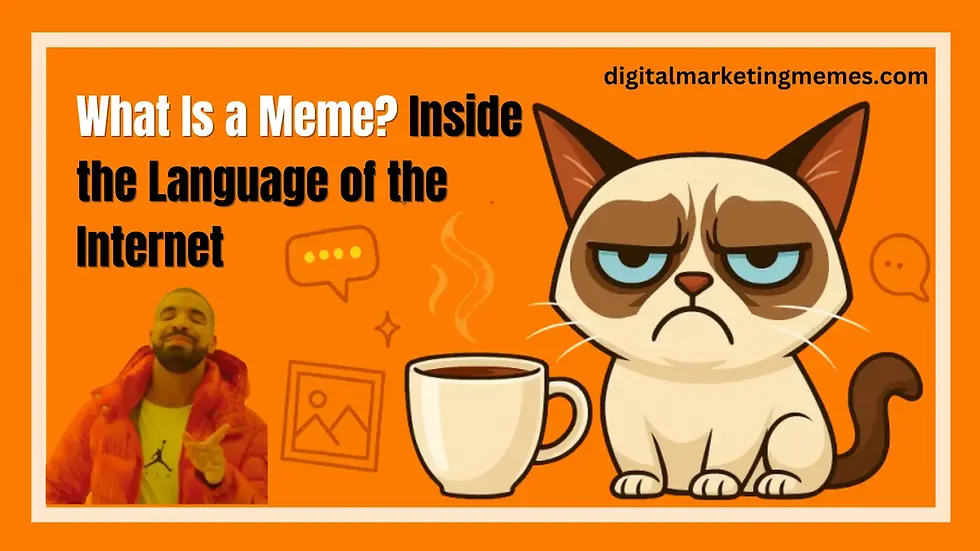
You can’t scroll for more than a few seconds these days without bumping into a meme. They’re everywhere, in your group chats, on Instagram stories, on Twitter threads, and sometimes even hiding inside brand ads. But let’s be real for a second, have you ever actually stopped to think about what a meme really is?
At its core, a meme is just a piece of content, a picture, a video, a phrase, that spreads across the internet because people find it funny, clever, or painfully relatable. The idea itself isn’t new. The word “meme” was coined way back in 1976 by biologist Richard Dawkins, who used it to describe how ideas and behaviors spread from one person to another, kind of like how genes evolve.
If you’re trying to picture what a meme example that truly captures internet culture, think Grumpy Cat, Distracted Boyfriend, or Woman Yelling at Cat. Each one tells a mini story, a mix of humor and truth that hits everyone the same way, no matter who they are or where they’re from.
Over time, memes have become the internet’s inside jokes. They’re how we deal with everyday chaos, laughing about our jobs, our moods, and even the world’s most absurd moments. In short, memes aren’t just entertainment anymore. They’re how the internet talks to itself.

Where Do Memes Come From
Believe it or not, memes didn’t start on Instagram or TikTok. The first viral ones came long before hashtags or Reels. Back in the late 1990s, memes spread through email chains and old-school message boards.
One of the earliest stars of the internet age? Dancing Baby, that pixelated animation of a baby grooving to music. It was weird, funny, and absolutely everywhere.
Then came the golden era of LOLcats (“I Can Has Cheezburger?”), Rage Comics and meme forums on Reddit. These were simpler times, when adding white text to a funny image was enough to make the whole internet laugh.
Now, memes are basically everywhere.
Reddit is the go-to place for deep cut humor. Instagram thrives on clean, caption-driven meme pages. TikTok turned memes into short videos that practically define pop culture.
Memes grow and mutate with culture. A single tweet, a celebrity photo, or even a blurry screenshot can go from niche to global overnight. And the best part? Nobody owns them; the internet does.

Types of Memes
Just like music has genres, memes come in all kinds of flavors. Some make you laugh, some make you think, and some are so strange they only make sense at 2 a.m.
Reaction Memes
These are the ones we all know and love. The “Drake Hotline Bling” meme, you know, the one where Drake says “no” to one thing and “yes” to another, is a classic. It’s how the internet expresses preferences without saying a single word.

Relatable Memes
These hit a little too close to home. Think “This Is Fine,” the cartoon dog calmly drinking coffee while everything around him burns. It’s tragic and hilarious all at once, basically adult life in a nutshell.

Pop Culture Memes
Movies, shows, and celebrity moments feed the meme machine every day. From the Barbenheimer craze to Pedro Pascal eating a sandwich, pop culture moments become shared digital experiences through memes.

Political and Commentary Memes
Not every meme is about laughter. Some are about perspective. From Bernie Sanders at the inauguration to the NPC trend, memes have become a new form of social commentary, fast, funny, and sometimes brutally honest.

Dank Memes
Now, what is a dank meme? In internet slang, “dank” means bizarrely funny, ironic, or absurd. These are the memes that often look low quality or distorted, and that’s the joke. It’s humor for people who’ve seen it all online.

If you ever want to explain what a meme example, show someone one of these. Each type tells a different story about how people use humor to make sense of the world.

Five Tips for Writing a Meme
Good memes might look random, but trust me, they’re not. The best ones are quick, clever, and perfectly timed. Here are a few things that actually help.
1. Get to the point
Online attention spans are microscopic. The punchline should land instantly. If someone has to squint or think too hard, it’s over.
2. Make it relatable
The strongest memes are the ones that make people say, “Wow, that’s literally me.” Use small, universal experiences, bad Wi-Fi, 9 a.m. meetings, or that one friend who replies “haha” after three days.
3. Use familiar templates
People love recognizing a meme format. That’s half the fun. Start with well known ones like Distracted Boyfriend or Woman Yelling at Cat, then add your twist to make it yours.

4. Mix irony with truth
The perfect meme usually walks a fine line between absurd and real. The more unexpected your combo, the better.
5. Don’t overdo it
Never explain your joke. Let the humor breathe. Keep visuals clean and avoid trying too hard; forced memes rarely work.
If your meme gets screenshotted and shared in someone’s group chat, congratulations. You’ve done your job.

Need a laugh to survive the start of the week? Browse our funniest Monday memes to kick off your week right.
What Is a Memer
Behind every viral post is someone who knew exactly what to post and when, the memer.
So what is a memer? They’re the people behind the jokes. Some are teenagers who turn inside jokes into viral posts. Others are brand social media managers with a knack for humor. And then there are the full time meme page creators, running communities bigger than most magazines.
Some memers specialize in punchy one liners, others in sharp social commentary. But they all have one thing in common, they understand the internet’s rhythm.
In a way, memers are the stand up comedians of the digital world, quick, clever, and always ahead of the curve.
Cultural Impact of Memes
Memes aren’t just funny pictures anymore. They’ve become one of the most powerful cultural tools on the internet.
A good meme can say more than a thousand words. “OK Boomer” sparked a global conversation about generations. “No thoughts, head empty” became a universal mood. “Woman Yelling at Cat” is the internet’s favorite metaphor for pointless arguments.

Memes have even crept into politics, activism, and mental health awareness. They simplify complex issues into bite-sized, emotional messages that anyone can understand.
They’ve become our way of processing chaos, taking frustration or confusion and turning it into collective laughter.
Memes in Marketing and Communication
Brands have caught on to something big: memes work.
They’re not just entertainment. They’re communication gold, short, visual, and instantly relatable. In a world where people scroll faster than ever, memes make them pause.
Unlike traditional ads, memes feel human. They let brands drop the corporate tone and join the conversation. When done right, they build community and trust faster than any paid campaign.
The Future of Memes
The future of memes looks wild and exciting.
With AI tools becoming mainstream, meme-making is faster and more creative than ever. You’ve got ChatGPT writing captions, Midjourney designing visuals, and meme generators doing half the heavy lifting. Pretty soon, anyone can become a memer in minutes.
Then there’s the rise of meme NFTs. Remember Disaster Girl and Nyan Cat? Both sold for thousands of dollars. Memes have officially become collectibles, a kind of digital art that holds both cultural and financial value.

And platforms are evolving too. TikTok, Reels, and YouTube Shorts are blurring the lines between memes, trends, and storytelling. People aren’t just sharing memes anymore; they’re participating in them.
In the near future, we might even see personalized memes, AI-powered humor tailored to your mood, location, or interests. Imagine scrolling and seeing memes that feel like they read your mind.
Still, no matter how much technology changes, the heart of memes will stay the same. They’ll always be a reflection of human creativity, quick, clever, and delightfully chaotic.
Why Memes Matter
In today’s digital world, memes are more than jokes. They’re how we share emotions, ideas, and humor in ways words alone can’t. Memes connect people across cultures, turning simple moments into shared laughter and understanding.
If you enjoy exploring the fun side of online culture, check out Digital Marketing Memes for more creative and relatable meme content.


The focus and mental endurance needed to stay fully present during meaningful conversations about support and prevention really show how powerful a clear head can be in any demanding situation. That same quality gradually started shaping the way I handle certain personal activities that require patience and self-control. While looking for a straightforward mobile option some time ago, I came across https://pickem-mongolia.com/melbet/ and found it fitted what I was after. Over the months that followed I learned that staying level-headed matters more than most other factors: I keep simple records of what happens, stick to fixed personal limits, and step away the moment things feel off. Earlier periods where short positive runs made me push too far taught me that…
This post on what a meme is really breaks down how these simple pieces of content carry shared humor and ideas across the internet, evolving as people remix them over time. It reminded me of a time in class when we kept resharing the same meme until it became our inside joke for the semester. In stressful weeks, thoughts like pay someone to take my class for me pop up, but those shared moments show how engagement makes the experience more memorable. Your post makes me smile.